
Kind diary · July 1–31, 2026
The soft no-spend month: what we bought anyway
We tried a month with fewer automatic treats, fewer “while I’m here” purchases, and absolutely no punishment for being a person.
Our soft no-spend month cut optional spending by $238, even though we bought $72 outside the original plan. The useful part was not a perfect streak. It was learning that repairs, small acts of care, and well-timed convenience deserved room, while bored browsing and duplicate groceries did not.
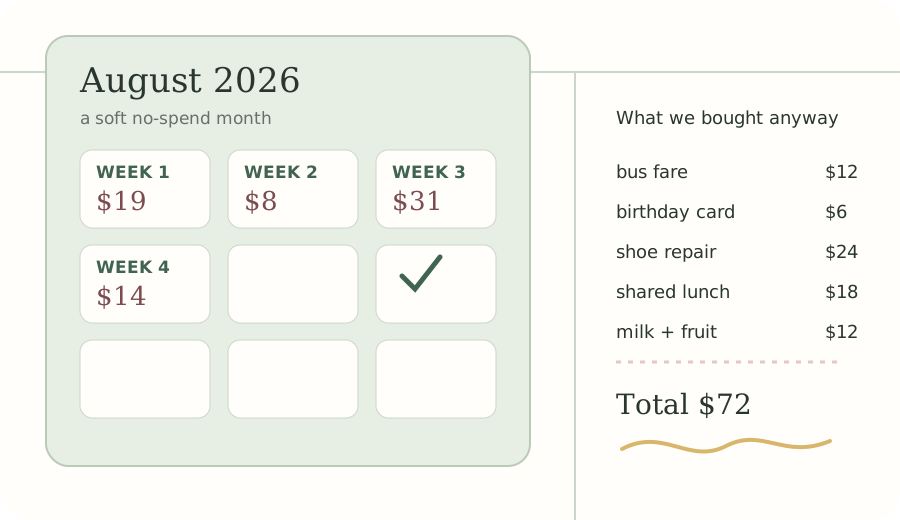
The rule was a pause, not a ban
On June 28, I wrote our rules on the back of an envelope. From July 1 through July 31, Theo and I would pause clothes, home décor, books we could borrow, solo takeout, hobby supplies, and the small online orders that begin with free shipping. Rent, bills, medication, transport, planned groceries, and existing subscriptions stayed. So did birthday gifts and replacing something essential that broke.
We called it “soft” because the language mattered. A hard ban turns every exception into a courtroom. A pause creates enough quiet to hear the reason beneath an impulse. Before buying from a paused category, we waited 24 hours and wrote one sentence: what problem would this solve? We did not make ourselves defend apples, prescriptions, or seeing a friend.
Week one: the reflex was louder than the desire
On July 2, I opened a homewares tab while waiting for an invoice. I wanted a $26 striped cushion until I wrote, “This would make the chair look finished.” The chair was already comfortable. The tab closed. On July 4, Theo packed coffee for a long library shift and forgot it on the counter. He drank the staff-room tea instead of buying another.
Our first exception came July 6: $12 in bus fare after heavy rain made a 42-minute walk foolish. This was technically transport and therefore allowed, yet writing it down helped. The month was already doing its job: we were making a small decision consciously, not proving toughness to an imaginary judge.
Week two: care is not clutter
A friend’s birthday landed on July 11. We had planned a gift from a second-hand bookshop, but I added a $6 card because the blank one in our drawer felt wrong for the occasion. Two days later we spent $18 on shared soup and bread when that friend admitted she was having an awful week. The meal was outside our solo-takeout pause and inside the life we wanted.
That $24 was the month’s clearest lesson. Some spending is not leakage; it is participation. Our kindness ledger grew from this distinction. The question became less “Could we avoid it?” and more “Would we be glad this happened when we read the statement next month?”
Week three: maintenance won
On July 18, the sole of my everyday shoe began peeling away. A cheap replacement would have passed the no-spend test only by technicality, so I paid a cobbler $24. The repair was ready on July 21 and has already outlasted the month. Postponing it would have turned a manageable maintenance cost into a larger replacement.
We nearly bought two pantry organizers that week. The cupboard was irritating because it held three open rice bags and duplicate lentils, not because it lacked containers. Combining the packages fixed most of the problem. That little inventory also inspired our pantry-first week and full $23 meal log.
Week four: the groceries were too strict
Our grocery plan assumed we would use frozen fruit until August. By July 27, both of us wanted something crisp and fresh. We bought milk, nectarines, and cucumbers for $12. It was not a failure. The original $48 weekly grocery figure had been too low for the way we actually eat in summer.
There were no triumphant final-day purchases. On July 31, we reviewed the list over pasta. Nine things remained on the wish page. Six no longer interested us. We moved a replacement bath mat and a used copy of a reference book into August; the cushion, organizers, two shirts, and novelty cake tin disappeared.
| Date | Purchase | Cost | What it taught us |
|---|---|---|---|
| July 6 | Bus fare in heavy rain | $12 | Convenience can protect time and health |
| July 11 | Birthday card | $6 | A specific gesture can matter more than the category |
| July 13 | Lunch with a friend | $18 | Connection belonged in the rules from the start |
| July 18 | Shoe repair | $24 | Maintenance prevents false economy |
| July 27 | Milk, fruit, cucumbers | $12 | A grocery target should fit appetite and season |
| Total | $72 | Five exceptions; none regretted | |
What the month actually saved
Across clothes, home bits, books, takeout, coffee, and hobby supplies, our April-to-June average was $310 a month. July’s $72 sat entirely in the exceptions above, leaving a difference of $238. We moved $200 to the apartment repair envelope and kept $38 in checking as breathing room. It was a modest result with a visible job, not a theoretical saving.
The waiting list mattered more than any hack. Twenty-four hours was long enough for urgency to fade but short enough to feel humane. Borrowing also became concrete: we reserved two library books instead of vaguely promising to use the library. If you want digital envelopes for the saved amount, our Goodbudget review explains the method; a plain notebook works too.
Rules we would use next time
We would name connection, repairs, and fresh-food top-ups as exceptions on day one. We would keep the 24-hour note, but not track essential purchases individually. And we would run the experiment for one ordinary calendar month—not during a holiday, move, or medical crunch. The point is to notice normal habits, not manufacture impressive deprivation.
Most of all, we would keep the adjective. “Soft” gave us permission to continue after spending. Nothing was blown on July 6. There was no restart, confession, or compensating day without lunch. We simply wrote down the bus fare and kept paying attention.
Soft no-spend month FAQ
What is a soft no-spend month?
It is a month that pauses optional shopping while keeping named exceptions for health, work, repairs, relationships, and ordinary groceries. The pause makes habits visible without pretending all spending is avoidable.
How much did you save in July 2026?
Compared with our April-to-June average for the paused categories, we spent $238 less. We moved $200 to a repair fund and left $38 as checking-account breathing room.
Does one unplanned purchase ruin the month?
No. Record it, ask what need it met, and continue. A useful experiment produces information. A perfect streak is neither required nor especially informative.
Mara Bell keeps an uneven-income budget and a very forgiving wish list. Theo Finch checked the totals against receipts dated July 1–31, 2026.